News Draft Business cases published for Local Government Reorganisation in Kent and Medway
Councils from across Kent and Medway have published a series of draft business cases to help inform the next steps in the government’s biggest shake-up of local councils in 50 years.
The cases, compiled with support from experienced advisers KPMG, explore different options for creating unitary councils in Kent and the areas they would cover in the future.
Currently, Kent County Council (KCC) delivers services such as education, social care and highways, while district and borough councils provide services like waste collection and housing. Under the proposed system, unitary councils would deliver all local services within their area, similar to the model already used by Medway Council.
This reorganisation is being pursued so that Kent can secure devolution, giving councils greater powers and funding to make decisions locally.
In September, councils agreed to explore two options in more detail using government funding.
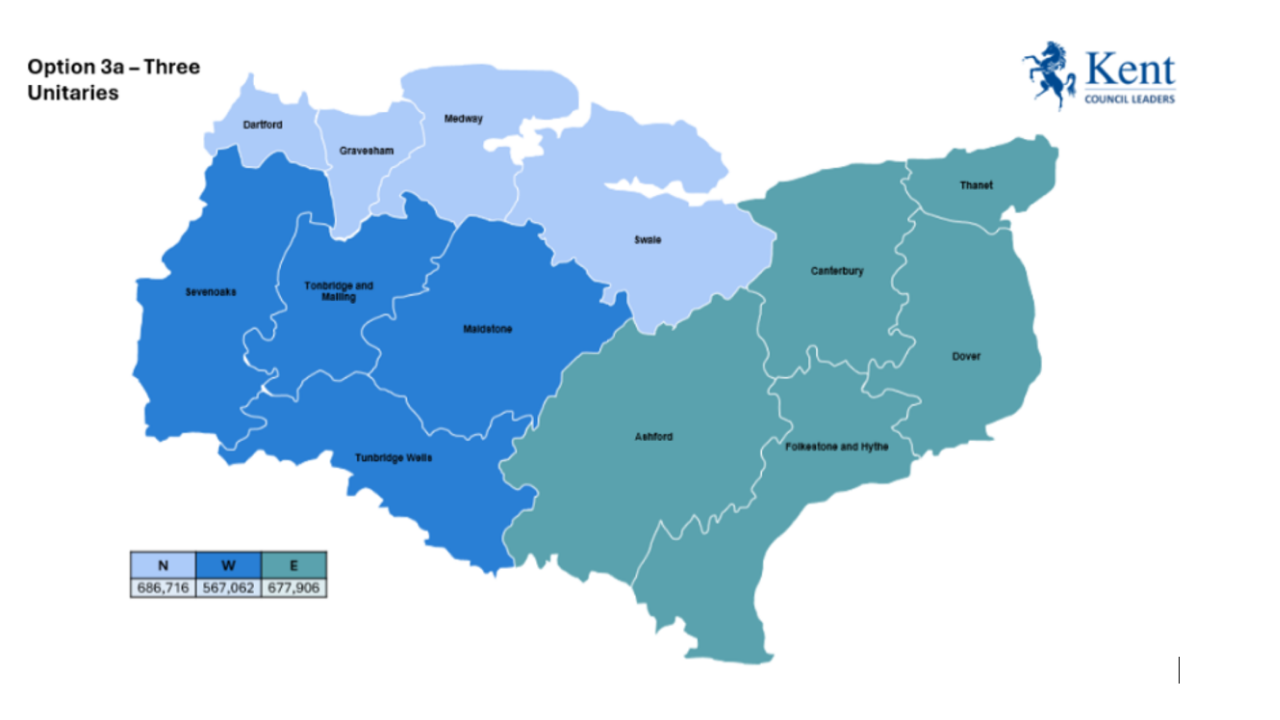
The first was three unitary councils consisting of Dartford, Gravesham, Medway and Swale in the north; Sevenoaks, Tonbridge and Malling, Maidstone and Tunbridge Wells in the west and Ashford, Canterbury, Thanet, Dover and Folkestone and Hythe in the east.
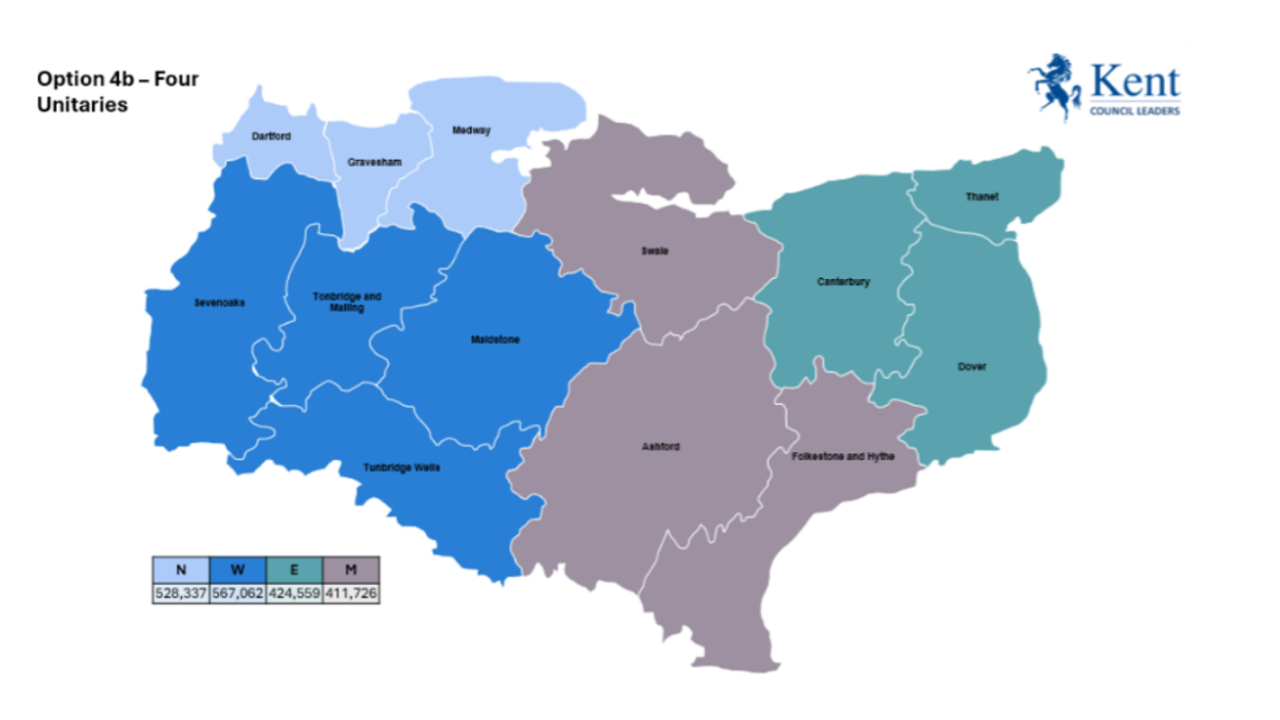
The next was four unitary councils consisting of Dartford, Gravesham and Medway in the north; Sevenoaks, Tonbridge and Malling, Maidstone and Tunbridge Wells in the west; Swale, Ashford and Folkestone and Hythe in the middle of Kent and Canterbury, Thanet and Dover in the east.
Councils across Kent kept the option to pay for and submit business plans for alternative options themselves using the KPMG data.
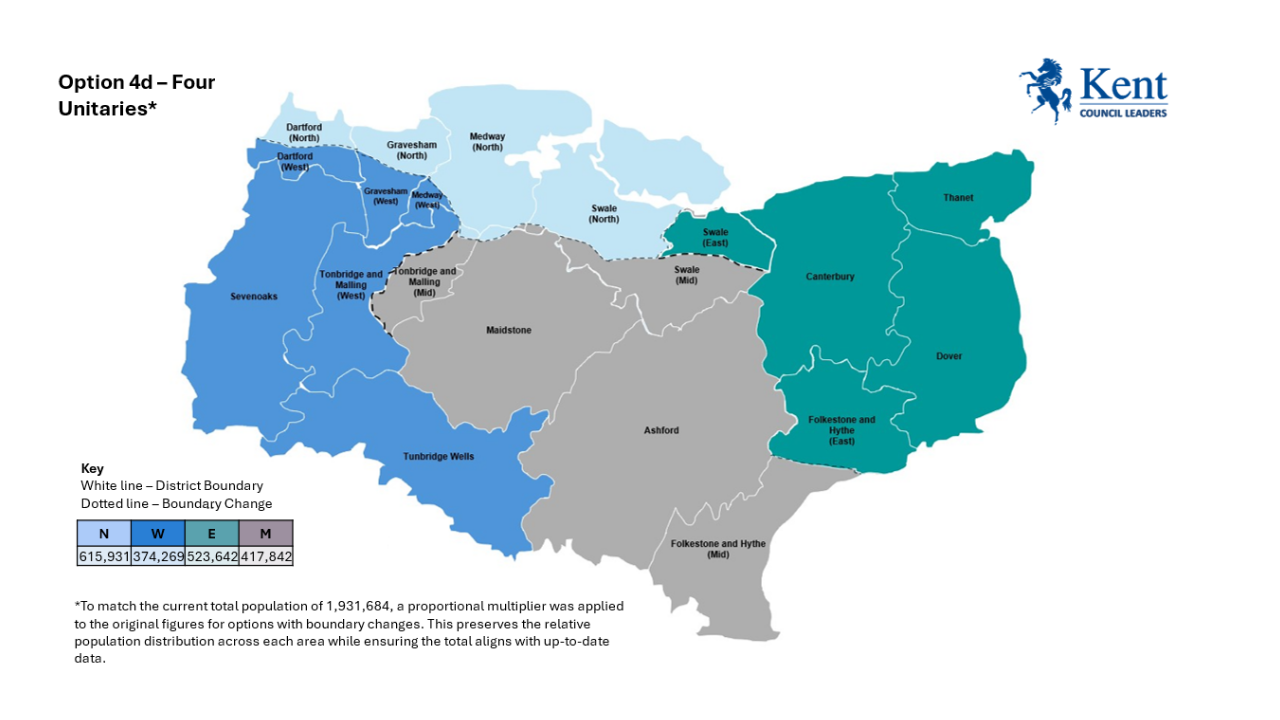
Medway Council is proposing a four-unitary model with changes to existing council boundaries.
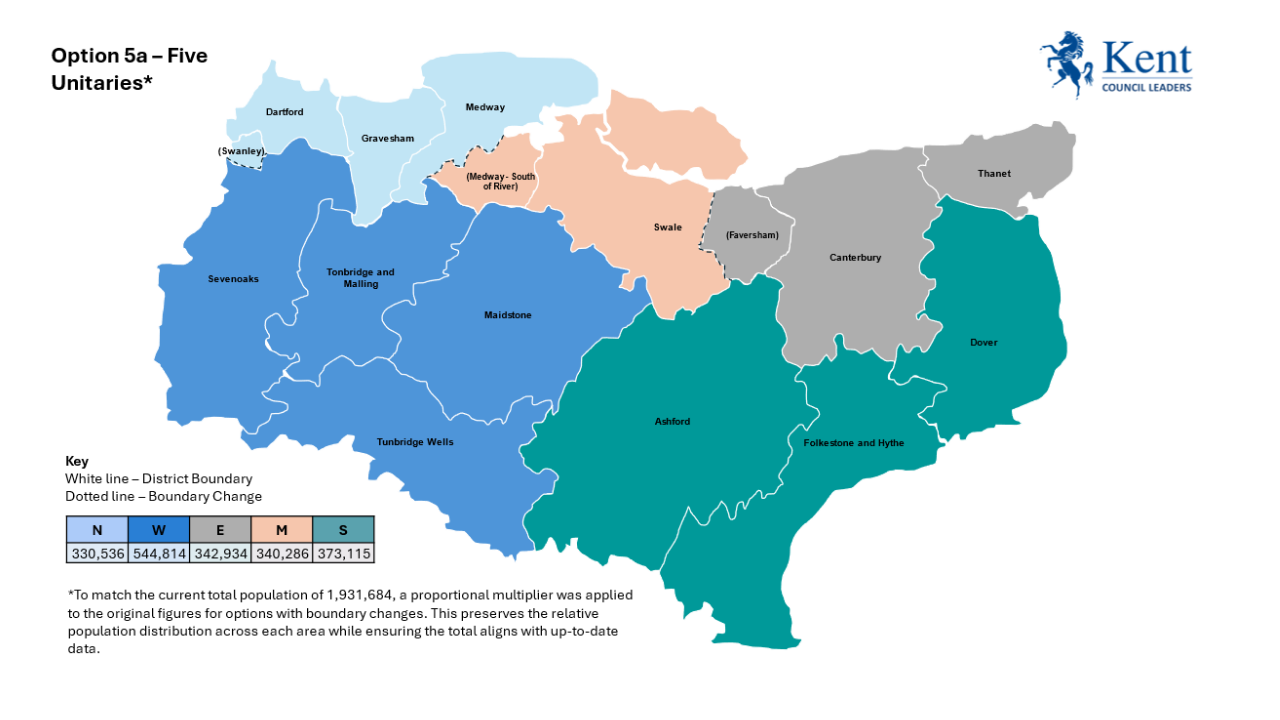 Gravesham Borough Council and Dartford Borough Council have developed proposals for a five-unitary model also including a number of boundary changes.

KCC announced its intention to explore the case for a single unitary council covering Kent and Medway supplemented with three area committees covering the north, east and west of the county.
Throughout November, each individual council will use its own decision-making process to confirm its preferred model and associated business case.
Business cases then need to be submitted to the government by Friday 28 November.
In the new year, the government is expected to carry out public consultation with all Kent residents on the preferred options.
A decision by the government on the final structure of unitary councils is expected in the summer.
Councillor Stuart Jeffery, Leader of Maidstone Borough Council: “Publishing these draft business cases is an important step in understanding what the future of local government could look like across Kent and Medway.“This work gives us the opportunity to explore different options together, based on evidence and feedback from residents and stakeholders. Whatever the outcome, our shared goal is to create a structure that delivers high-quality services and value for money for the people we serve.”
Meanwhile, the results of a public and stakeholder engagement exercise held to find out from people living, working and studying in Kent about what is important to them in reorganising councils has been published.
It found the public wants the new arrangements to focus on the quality of the services provided, ensure efficiency and value for money and to solve people’s problems quickly.
The public saw opportunities in simplifying local government structures, clarifying responsibilities and making the most of economies of scale to streamline operations, reduce bureaucracy and deliver better value.
The results of the public and stakeholder engagement exercise can be found here.